Apheris logo
Menu

ApherisFold

Run and fine-tune co-folding models inside your environment

Test ApherisFold Lite Test the product directly in your browser. No setup required.

Run, benchmark, and improve co-folding models in your environment

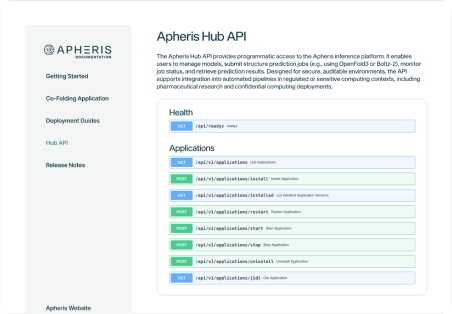
ApherisFold enables pharmaceutical teams to run leading co-folding models such as OpenFold3, Boltz-2, and Protenix-v1 locally on their proprietary data, benchmark them on curated datasets, and improve them through controlled fine-tuning workflows. Results can be inspected interactively in a 3D interface for scientific review or accessed programmatically via API to integrate predictions into existing drug discovery pipelines.

Access ApherisFold

Where co-folding models still struggle in drug discovery

Co-folding models have improved significantly, but performance still depends on how similar a new problem is to the data seen during training. In drug discovery programs, this can lead to unreliable predictions for specific targets, conformations, and binding modes. For computational drug discovery teams, the key challenge is therefore not simply running co-folding models, but understanding where predictions are reliable and how models can be adapted to their specific targets and datasets.

Where co-folding typically struggles

Novel targets or ligand chemotypes

When a protein–ligand complex differs significantly from structures seen during training, models often fail to predict accurate binding poses.

Protein conformations underrepresented in training data

If a ligand binds to a protein conformation that is rarely present in public datasets, models may predict a more common but incorrect conformation.

Large or complex biomolecular assemblies

Predictions can become unreliable when proteins form multimers or complexes with large sequence sizes.

Allosteric binding sites

Models frequently favor orthosteric binding modes because these are far more common in structural databases, leading to incorrect predictions for allosteric ligands.

Improve co-folding models through fine-tuning on proprietary data

ApherisFold enables computational drug discovery teams to fine-tune co-folding models on proprietary structural data within their own environment. Teams can prepare training datasets, run reproducible fine-tuning experiments, and evaluate improvements against base or federated models using consistent benchmarking setups.

Even small amounts of proprietary structural data can lead to meaningful improvements. Fine-tuned models can then be benchmarked against other checkpoints, inspected through our interface, and deployed across drug programs to support structure-informed design decisions.

From predictions to structure-informed drug design

ApherisFold helps teams turn co-folding predictions into usable outputs across drug discovery workflows.

  • Computational chemists can run inference, benchmarking, and fine-tuning workflows through APIs and integrate results into screening, design, and prioritization pipelines.

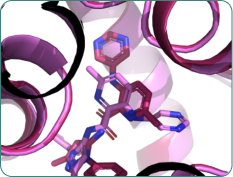
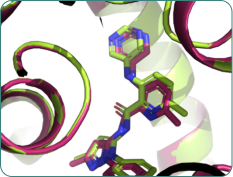
  • Medicinal chemists can inspect predicted binding modes to develop new design hypotheses. For example, identifying new pockets, hydrogen bond opportunities, or interactions that could improve affinity in the next design cycle.

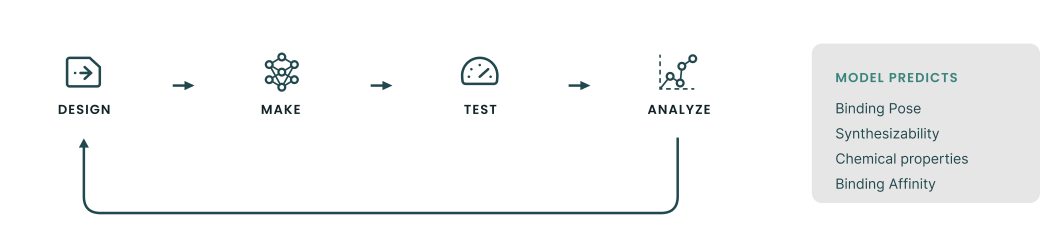
Together, this allows teams to evaluate large numbers of candidate compounds, compare predicted binding modes, and prioritize which molecules should be synthesized in the next DMTA cycle.

What teams use ApherisFold for

Prediction taskModels involvedDescription
Monomer structureOpenFold3 + Boltz-2 + Protenix-v1Predict the 3D structure of individual proteins. Enables understanding of folding and domain architecture.
Protein-protein interactionsOpenFold3 + Boltz-2 + Protenix-v1Predict the 3D structure of multi-protein complexes and protein–protein interactions (including antibody–antigen complexes).
Protein–ligand complex structureOpenFold3 + Boltz-2 + Protenix-v1Predict binding site and 3D pose of small molecules. Useful for structure-based drug design.
Binding AffinityBoltz-2In addition to structure predictions, provides estimates of binding affinity for protein–ligand interactions.
DNA/RNA complex predictionOpenFold3 + Boltz-2 + Protenix-v1Model structural complexes of nucleic acids (dsDNA, RNA). Useful for regulatory protein modeling, CRISPR systems, and base-specificity analysis.
More models will be added soon--

All prediction tasks can be used for lead optimization and virtual screening

Federated OpenFold3 Initiative

Improving co-folding performance through collaborative learning

The AISB Network’s Federated OpenFold3 Initiative fine-tuned OpenFold3 across proprietary pharma structural datasets using federated learning, powered by Apheris and conducted with the AlQuraishi Lab at Columbia University. Across participating partners (AbbVie, Astex, Bristol Myers Squibb, Johnson & Johnson, and Takeda), the federated model outperformed public and locally fine-tuned baselines on interface metrics and showed stronger generalizability across targets and chemotypes.

Try ApherisFold Lite

ApherisFold Lite provides a simple way to explore how ApherisFold works before deploying it inside your own environment. Open the interface directly in your browser and run OpenFold3 without setting up infrastructure or provisioning compute. This allows teams to understand the workflows, explore prediction outputs, and review how results are organized within the product. ApherisFold Lite is designed for early evaluation and is free to use. The full ApherisFold deployment enables secure inference on proprietary data, systematic benchmarking, API-based workflow integration, and fine-tuning on internal or federated datasets.

One application – two ways to work with co-folding models

FAQ section

Frequently asked questions about ApherisFold

QuestionAnswer
How does ApherisFold improve co-folding models?Teams can fine-tune models on proprietary structural data and benchmark improvements against base or federated models. This allows organizations to adapt models to their specific targets, chemotypes, and drug discovery programs.
Which models can be used in ApherisFold?ApherisFold supports leading co-folding models including OpenFold3, Boltz-2, and Protenix-v1, allowing teams to compare models and evaluate their applicability across targets and datasets.
Who typically uses ApherisFold?Computational chemists and structural bioinformaticians use ApherisFold to run large-scale inference, benchmarking, and fine-tuning workflows. Medicinal chemists use the interface to inspect predictions and evaluate binding hypotheses.
How does ApherisFold integrate with existing discovery workflows?Predictions and results can be accessed through APIs and integrated into existing design, screening, and prioritization pipelines, while the interface allows scientists to explore and compare predictions interactively.
Can ApherisFold run entirely inside our environment?Yes. ApherisFold can be deployed on-premise or in private cloud environments. All data, inference queries, and outputs remain within your infrastructure.

Access ApherisFold

Securely use the latest co-folding models, like Protenix-V1, OpenFold3 and Boltz-2, on your proprietary data.

Click here if the form doesn't work