Introducing Apheris Foundry: federated drug discovery models, customized to your data and accessible to your agents
Foundry helps computational scientists evaluate and customize drug discovery models on their own program data. It brings together co-folding, affinity prediction, ADMET, fine-tuning and benchmarking, alongside an RFD4 research preview for de novo design. Its modules and workflows run inside your own infrastructure and can be used directly or through your agents.
Public benchmarks do not tell you how a model will perform on your program
New drug discovery models appear every few weeks, from structure prediction to affinity and ADMET. Teams test them on their own data, but performance on public benchmarks does not tell them how well a model will work for their programs. Evaluating predictions, adapting models to internal data and connecting results across different models takes further work before a chemist can use those results to compare candidates. By the time that is done, there is already a new drug discovery model released.Researchers need to know whether a model works for their target, whether fine-tuning improves its predictions, and how those predictions can inform the next experiment.
What Foundry is
A computational scientist can use Foundry to test how a model performs on a target, fine-tune it on internal data, compare its performance with the baseline, and use the results to inform which candidates to investigate next. Foundry brings the data preparation, prediction, benchmarking and fine-tuning steps into workflows that run inside the team's own infrastructure.These steps are packaged as tasks that can be combined into workflows for a scientific objective. Teams can run workflows through Foundry Hub or use modules and workflows standalone, with their own data and compute. They can also connect Foundry to the agents and multiple sequence alignment services they run in their environment.Foundry brings together capabilities already used in Apheris' federated networks and makes them accessible through a common product. It also supports models from public releases, third parties and customers, including SandboxAQ's AQPotency and AQCell. You do not need to join a federated network to use Foundry with public, third-party or your own models.
Built for agents
Foundry is CLI- and agent-first by design. Every workflow ships with a skill, which tells agents which commands and workflows are available and how to run them, from predicting structures and affinity to fine-tuning a structure model.A computational scientist can ask an agent to run a structure-prediction or benchmarking workflow using Foundry's commands. For workflows run through Foundry Hub, the scientist can inspect the job and its results there.There is also a graphical user interface for selected workflows and a REST API on the Hub, all using the same underlying modules and workflows.
Product screenshot placeholder: show a real agent interaction starting a structure-prediction workflow alongside the corresponding job in Foundry Hub. Caption should explain what the researcher submitted and where they can inspect the result.
Capabilities in Foundry
Foundry brings together the following capabilities:
- Predict structure: generate multiple sequence alignments and run co-folding with OpenFold3 and Protenix, including templating, through the CLI and user interface.
- Benchmark structure: prepare data, run predictions and calculate metrics to assess a model on held-out program data, through the CLI and user interface.
- Fine-tune structure: adapt a co-folding model using internal structures and assess its performance on the targets of interest, through the CLI and user interface.
- Predict and fine-tune affinity: generate embeddings, train an affinity head on assay data and run predictions through the CLI.
- Prepare structure data: prepare structural inputs for prediction, benchmarking and fine-tuning through the CLI.
- Predict and fine-tune ADMET: run predictions and fine-tune models on assay data using Foundry's standalone modules.
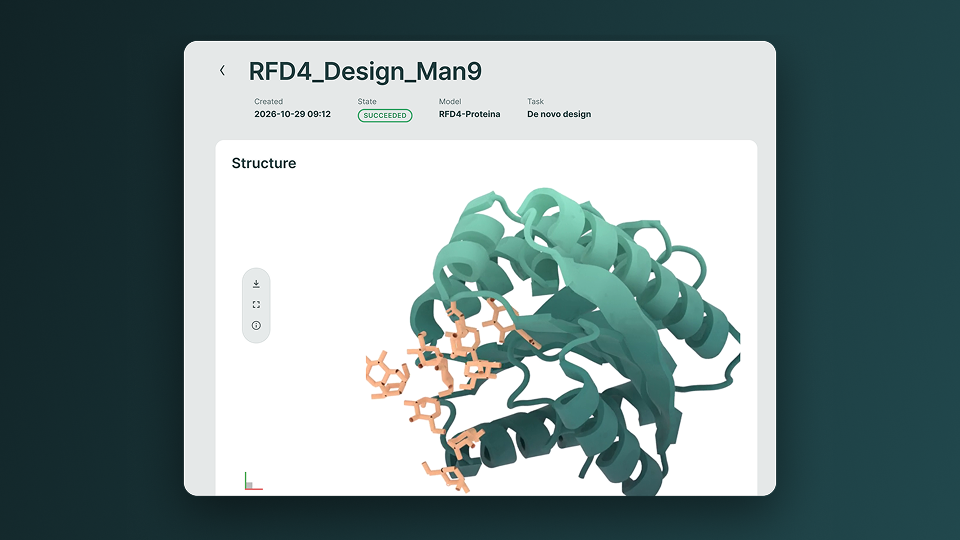
- Explore de novo design with RFD4: run RFD4 as a research preview using a standalone container.
Adapt models to your data and measure what improves
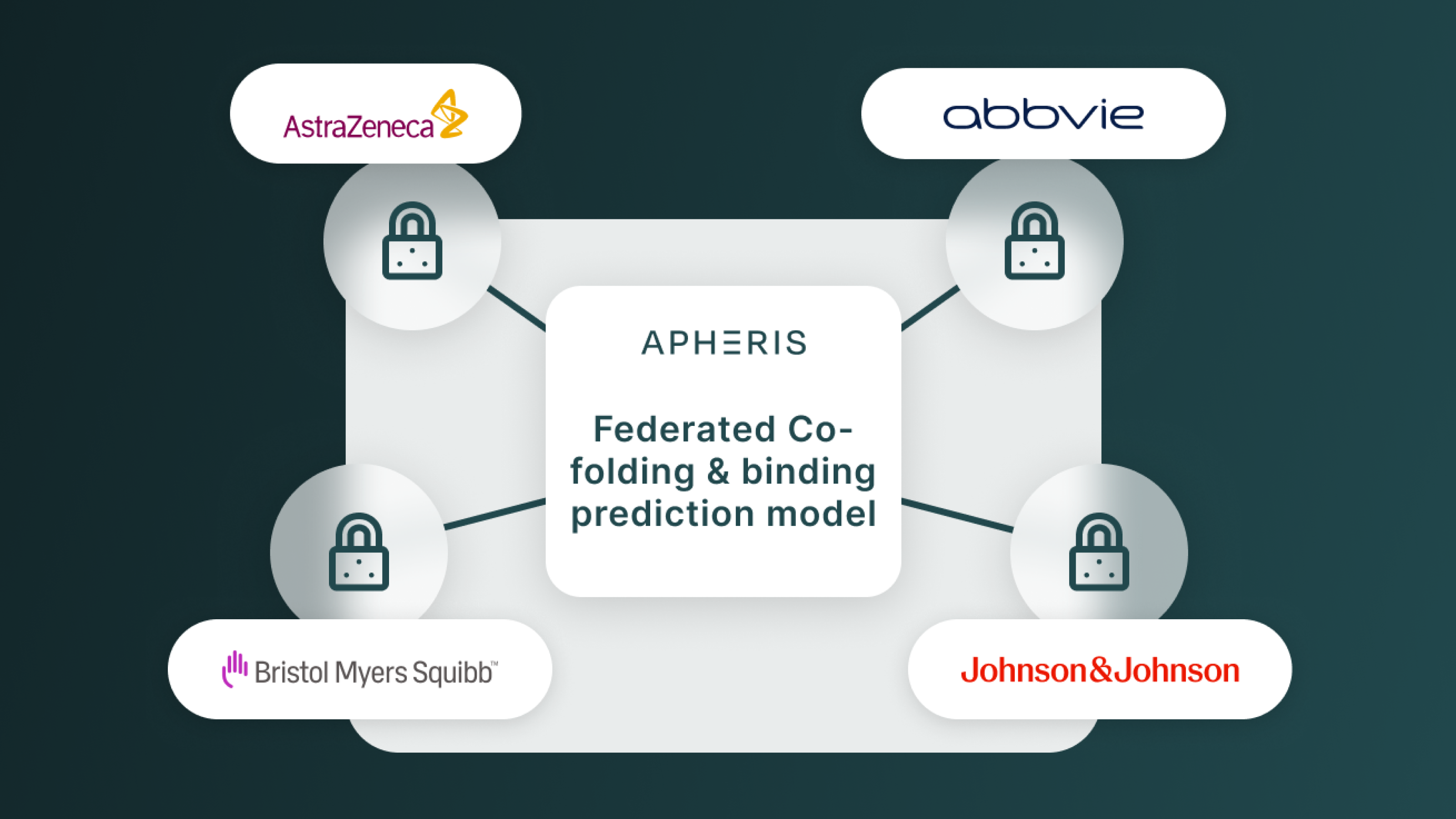
Researchers need to know whether adapting a model to their own data improves its performance for their program. Foundry supports fine-tuning for structure, affinity and ADMET models through the interfaces described above.For example, a team can take a co-folding model, adapt it to its targets using internal structures, and benchmark it against the baseline on held-out data. This comparison helps researchers assess whether the adapted model is useful for their program before using its predictions in further work.The team can then use the model to generate structural inputs for affinity training on its own assay data. These steps run inside the team's environment and can be repeated as new data arrives.Models trained through Apheris's federated networks draw on data from participating partners. Members of the relevant network can use Foundry to evaluate and further customize those models for their own programs, alongside models from other sources.
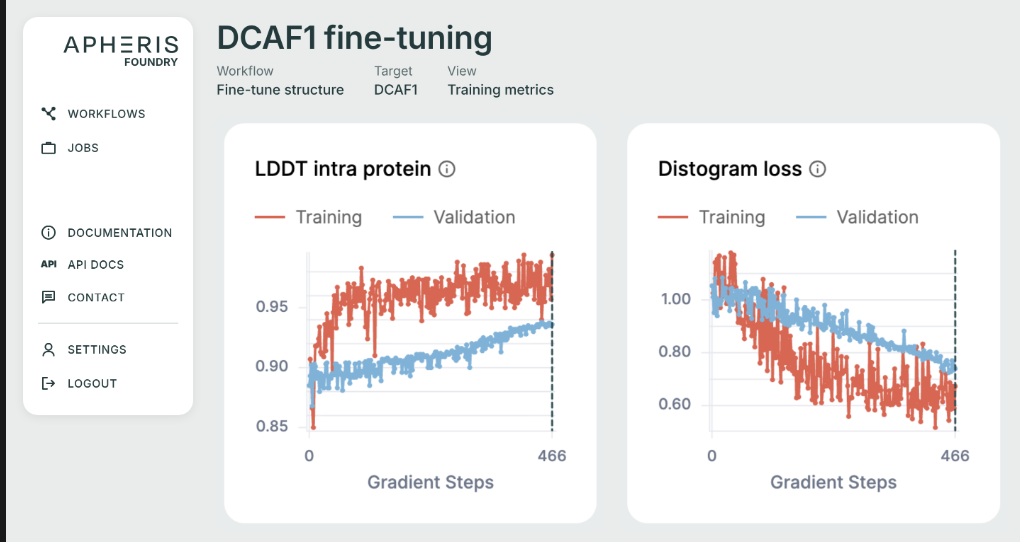
Distogram loss: Learning progress during DCAF1 fine-tuning. Training and validation distogram loss decrease over the recorded steps; lower is better.
Explore Foundry for your program
Explore Foundry on your own program data.
References