Decision-grade cell-response models for your drug programs
Run AQCell in your environment, fine-tune it on your chemistry and your endpoints, and broaden its applicability domain by joining the Virtual Cell Network.
Decision-grade cell-response models for your drug programs
Run AQCell in your environment, fine-tune it on your chemistry and your endpoints, and broaden its applicability domain by joining the Virtual Cell Network.
THE PROBLEM
Public models have never seen your compounds or your assays.
Public perturbation data is mostly cancer cell lines treated with compounds that are already published. Your programs run proprietary series, in the cell systems your decisions depend on, against the endpoints you score. No company holds enough of that evidence on its own.
WHAT IT TAKES
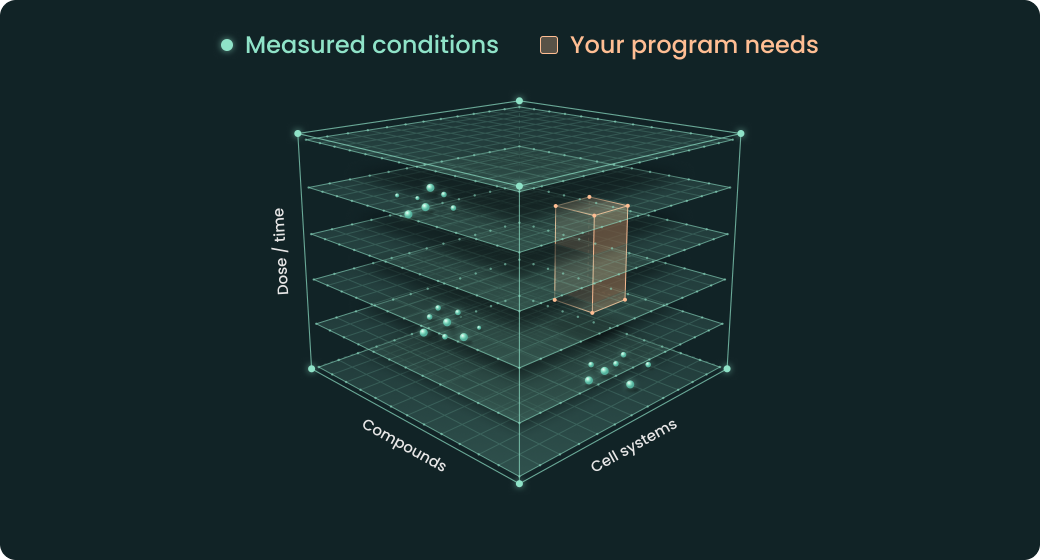
A model has to be trained on the conditions your programs run.
Whether a prediction can carry a program decision depends on three things.

Clinically relevant data

Dose and duration

An efficacy or safety endpoint
THE PARTNERSHIP
Operated by Apheris. Built on SandboxAQ's AQCell.
Apheris operates the network and its federated infrastructure. SandboxAQ provides AQCell, its virtual cell model.
THE OFFERING
Adapt AQCell to your data.
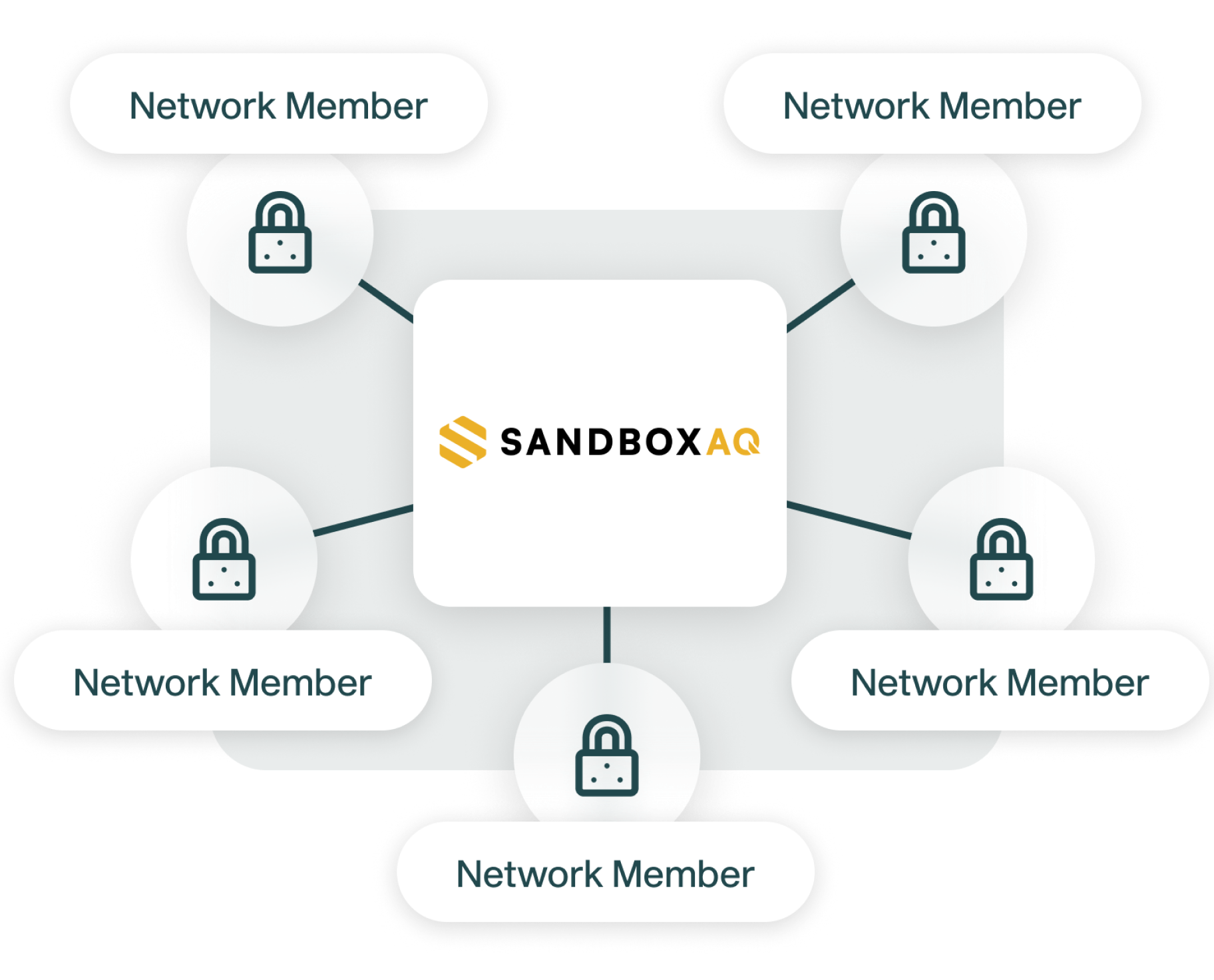
Fine-tune on your own assays, or join the Virtual Cell Network to also train on data from other members. Your data never leaves your environment.

Partners train one shared foundation. Founding members have a say in which endpoints it targets.
APPLICATIONS
What training on proprietary data changes for your drug program.
More confirmed compounds meeting your program’s criteria.

Toxicity liability triage
Rank a series on cytotoxicity, mitochondrial toxicity, hERG and DILI signals before you synthesize it.

Mechanism and pathway readout
Predicted pathway activity per compound and dose, tested against your hypothesis.

Cell system and dose selection
Which cell lines and which concentrations carry the signal your program needs to see.

Series rescue
Find the analogue that keeps potency and loses the liability.
THE MODEL
AQCell predicts what a compound does to a cell.
In the Virtual Cell Network, it learns from partners and from your own program.
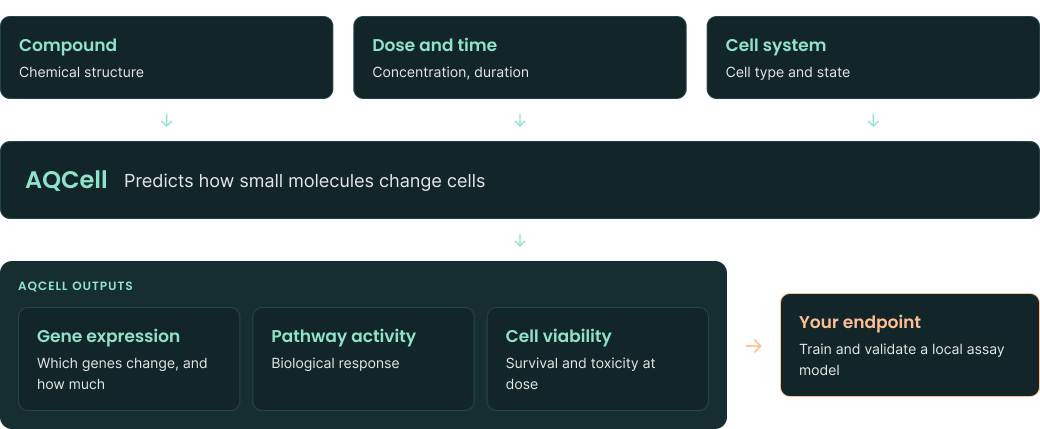
AQCell is designed for small-molecule drugs, with a focus on oncology viability and hepatic endpoints. On the use of drug features by chemical-perturbation models: Bai J, Prince S, Nitschke GS, bioRxiv preprint (2026), not peer reviewed, doi:10.64898/2026.05.13.724458.
WHY PHARMA DATA
Federated training matched pooled data and beat every single partner
We emulated a prospective Virtual Cell Network to test whether it could make compound-to-gene-expression predictions. It worked.
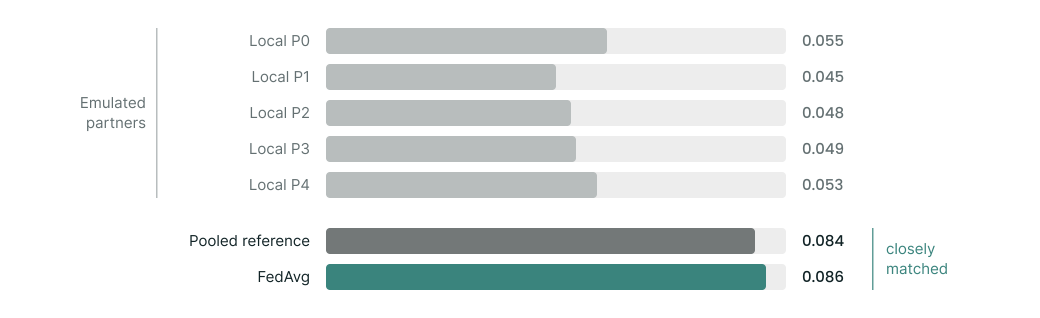
Compound-specific expression correlation
Test set-up
DATA
Public drug-induced expression data (LINCS), split by chemistry across five emulated partners.
SHARED TEST
245 compounds that none of the models had seen.
WHAT IS COMPARED
Pooled trains on the combined data. FedAvg combines local model updates.
HOW IT WORKS
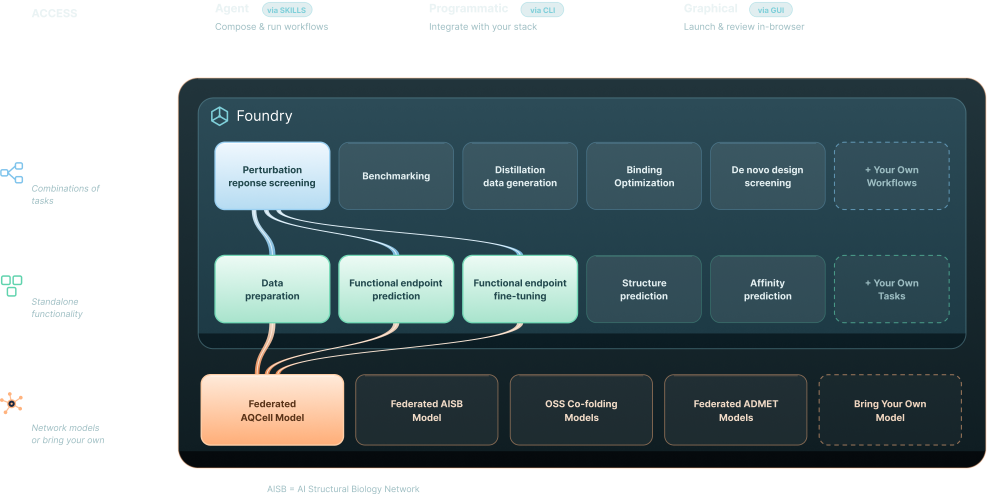
AQCell runs inside your environment.
Apheris Foundry deploys AQCell on your own cluster, fine-tunes it on your data, and plugs the output into your DMTA cycle. Raw structures and expression profiles stay local. When the network trains, only model parameters move between members.
HOW TO START
Start with one program.
1
Understand your programs and endpoints.
2
Check the scientific fit.
3
Start with fine-tuning.
4
Agree membership and terms.
THE NETWORK
What the network adds, and what stays yours.
Members train one shared foundation together and keep what they bring. The founding window is open through Q1 2027.

The shared foundation
Trained across pharma partners, delivered into your environment. You own the weights.

Private endpoint layers
Trained on your own data. Assay definitions and prediction targets never leave your environment.

Proof before you commit
A federated-uplift assessment estimates what the network would add, per endpoint, before you contribute data.

Steering input
Founding members have a say in which endpoints the first model targets. Companies joining later work with that list already set.
You keep what you bring.
FAQ
Frequently asked questions
Speak to our scientist
