Fine-tuning large language models requires high computational and memory resources, and is therefore associated with significant costs. When training on federated datasets, an increased communication effort is also needed. For this reason, parameter-efficient methods (PEFT) are becoming increasingly important.

Read the article: https://ieeexplore.ieee.org/document/10840125
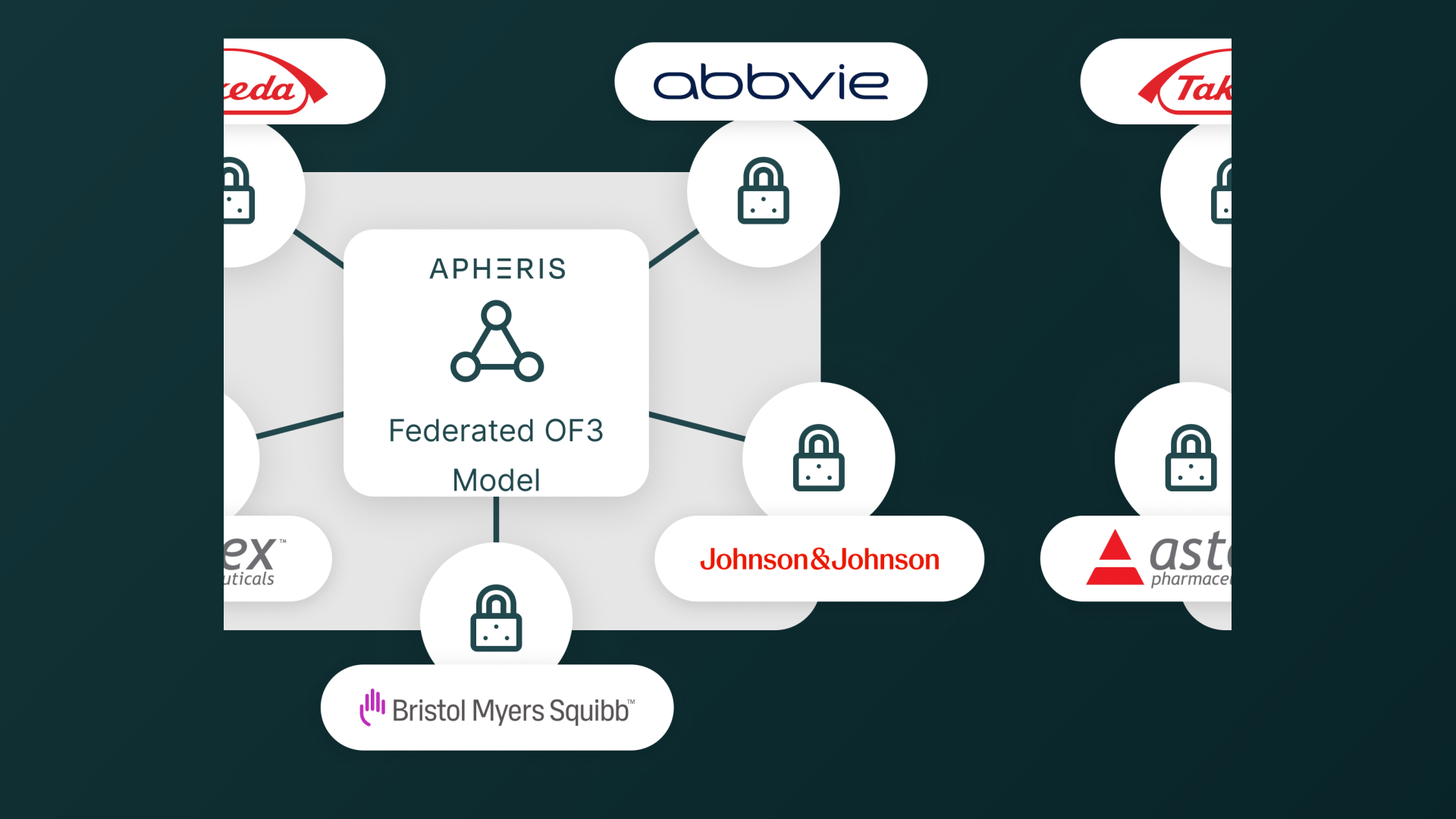
Five pharma companies fine-tuned OpenFold3 Preview 2 across 20,167 private structures, none of which left their environments. On 1,056 held-out structures, high-quality interface predictions rose from 35.6% to 52.1% and correct ligand poses from 28.9% to 46.8%, ahead of every public model. A first for federated drug discovery.

GEN published a thoughtful coverage of last month's Bio-IT World plenary keynote where JT from Apheris presented a session on federated learning and fine-tuning for drug discovery.

ADMET liabilities drive 40–45% of clinical attrition, and models break on novel chemistry which is precisely where chemists need them most. Pre-competitive federated networks address this through complementary data collaboration. A walk through the evidence behind the Apheris ADMET Network.
NEWSLETTER
A quaterly briefing on operationalizing and customizing co-folding, ADMET and antibody developability models. Written by Robin Röhm, co-founder and CEO at Apheris.

Robin Röhm
Co-Founder & CEO
© 2026 Apheris AI GmbH. All rights reserved.